Damage Analysis
Purpose/Overview
In this article, you will learn how to use the Damage Analysis feature to track and analyze damage incidents associated with excavators, facilities, and locators. Damage Analysis helps organizations identify trends, measure damage rates, and evaluate excavation and locating performance over time.
Each damage incident is recorded using your company's configured damage form (such as a Damage Form, DIRT Form, Near Miss Form, Incident Form, or Claim Form). By consolidating this information into a single dashboard, organizations can monitor damage occurrence rates, identify high-risk areas, and support continuous improvement initiatives. Before using this feature, your organization must contact your Irth System Administrator to configure the company-specific damage form used for reporting incidents.
Navigation Path:
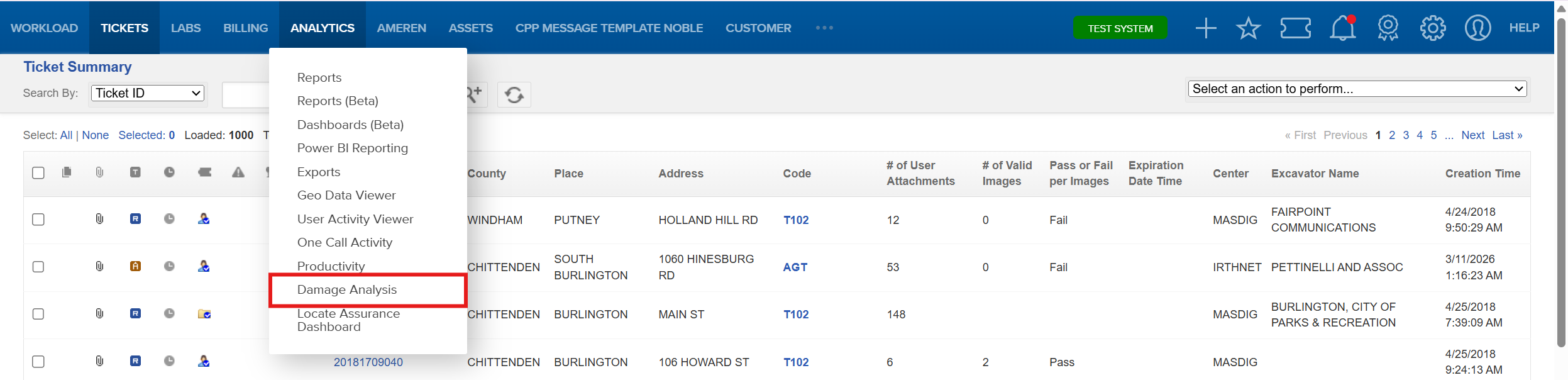
To access this feature: Utilisphere > Analytics > Damage Analysis
Things to Know:
- Damage Analysis requires a configured damage form. Contact your Irth System Administrator for setup assistance before using the feature.
- Access to Damage Analysis may be restricted based on user roles and permissions assigned by your organization.
- Damage data is filtered by date and is calculated using damage forms submitted during the selected date range.
- If an excavator listed on a ticket does not match an existing excavator record or alias, the system automatically adds it to the Excavator Summary.
- Damage percentages can be configured to consider only incidents where an excavator, facility, or locator was determined to be at fault.
- Exported reports are downloaded in CSV format for additional analysis and reporting.
Key Benefits/Use Cases:
Damage Trend Analysis: Monitor damage rates across excavators, facilities, and locators to identify recurring issues and high-risk areas.
Performance Monitoring: Track incident rates and determine whether excavation or locating practices are improving over time.
Operational Reporting: Export damage data for regulatory reporting, management reviews, audits, and performance scorecards.
How It Works:
Open Damage Analysis
Navigate to:
Analytics > Damage Analysis
The Damage Analysis page displays damage information captured through your organization's configured damage form.
Apply Filters
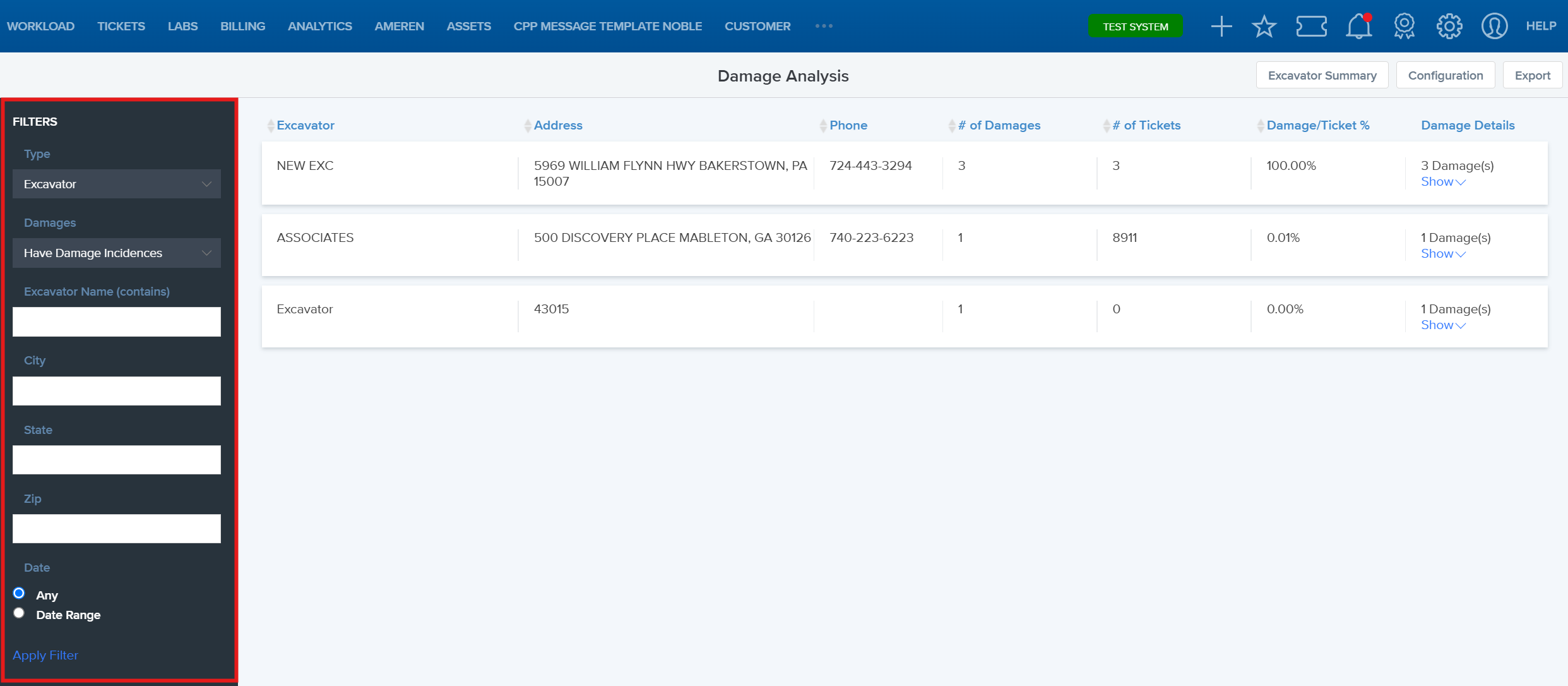
Use the filter panel to narrow results by:
- Date range
- Damage status
- Excavator
- Facility
- Facility Type
- Locator
- Locating Area
- Responsibility Area
Click Apply Filter to refresh the results.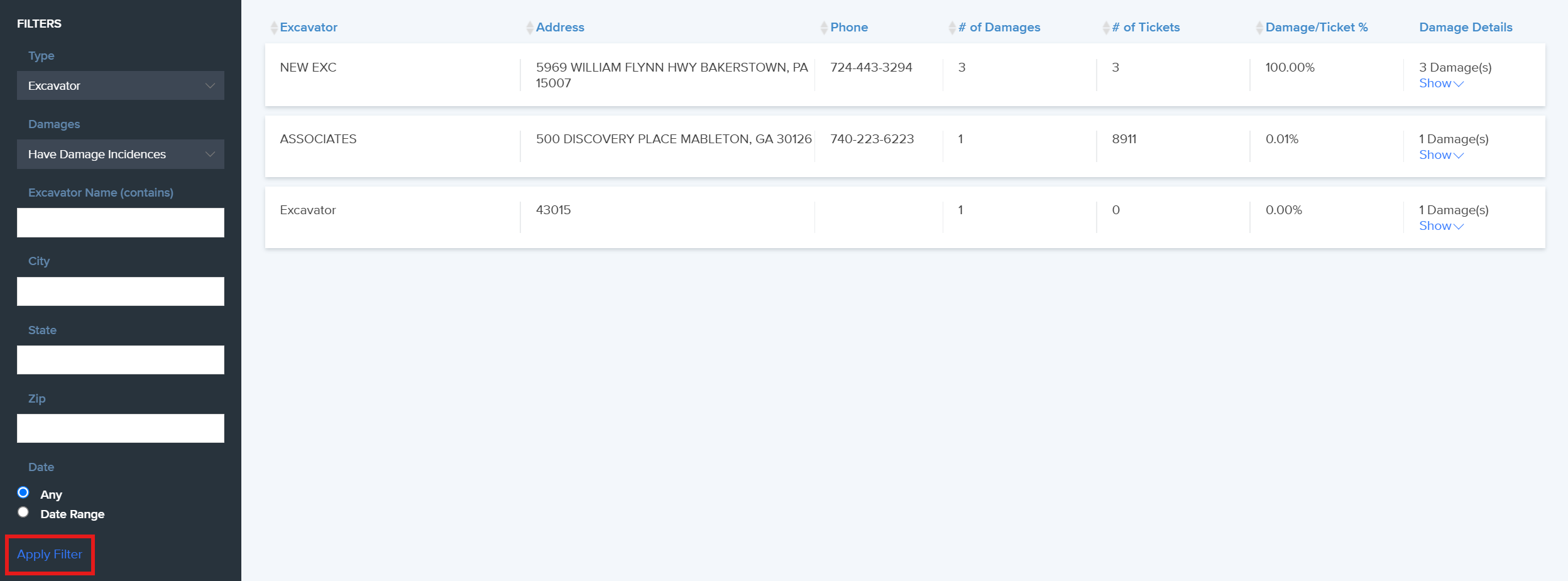
Review Summary Data
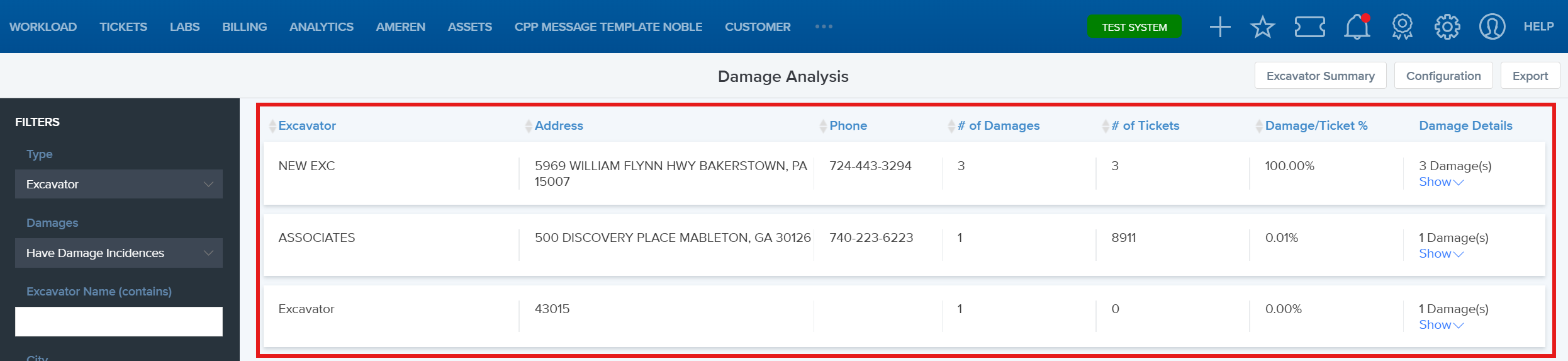
Analyze the displayed information, including:
- Number of Damages
- Number of Tickets
- Damage/Ticket Percentage
- Excavator Information
- Facility Information
- Locator Information
Select Show within the Damage Details column to view links to individual damage records.
Export Data (Optional)
To export the displayed results:
- Click Export in the upper-right corner.

- The current results are downloaded as a CSV file.
- Open the exported file for additional analysis or reporting.
Understanding Damage Calculations
Damage percentages are calculated using the following formula:
Damage Rate = Number of Damage Incidents ÷ Number of Tickets × 100
The resulting value is displayed as the Damage/Ticket Percentage (%).
If your organization uses an At-Fault field, damage incidents are only attributed to the excavator, facility, or locator identified as responsible for the incident.
FAQ/Troubleshooting:
Q: Why don't I see any damage records?
A: Verify that your organization has a configured damage form and that your selected date range contains damage incidents.
Q: Why does my Damage/Ticket Percentage appear lower than expected?
A: The percentage is calculated using both the number of damage incidents and the total number of tickets within the selected date range. If your organization uses an At-Fault field, only responsible parties are included in the calculation.
Q: Can I export filtered results?
A: Yes. The Export feature downloads only the data currently displayed based on your selected filters.
Q: Why is a new excavator appearing in Excavator Summary?
A: If a ticket contains an excavator name that does not match an existing excavator record or alias, the system automatically adds it to Excavator Summary.
Q: Can I review individual damage incidents?
A: Yes. Select Show in the Damage Details column to view links to associated damage records.
Questions? Contact us!

Was this article helpful?
That’s Great!
Thank you for your feedback
Sorry! We couldn't be helpful
Thank you for your feedback
Feedback sent
We appreciate your effort and will try to fix the article